25.3108° N, 83.0141° E
Burning body at the cremation grounds of Manikarnika Ghat, Varanasi (India)
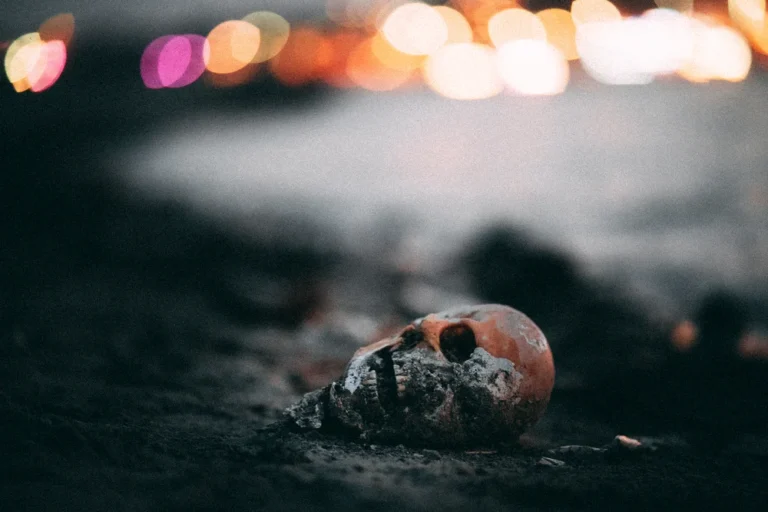
Memento mori (Latin for ‘remember that you [have to] die’)
Part two of a three part series on the Cremation grounds of Varanasi.
In part one, we discussed the religious importance of Varanasi, located at the Holy Ganges River, a place where Hindus seek liberation from the cycle of death and rebirth.
Manikarnika Ghat

The most sacred site for this purpose is Manikarnika Ghat, often referred to as the “Maha Smashaan,” or the “great cremation ground.” Here, it is believed that Lord Shiva whispers the Taraka Mantra into the ears of the dead, helping their souls achieve moksha. The event is so sacred that women are not officially allowed at the ghat (because crying is forbidden) – death here is seen as a “happy” event, marking the soul’s spiritual freedom.
Manikarnika is just one of the 84 ghats in Varanasi, but it stands apart as the eternal burning grounds, where around 100 bodies are cremated daily. However, not all souls are granted this ritual. Pregnant women, children, holy men, and those too poor toafford the cost [~250$] are just thrown into the Ganges river – more on that later.

Fires at Manikarnika Ghat
Cows roam freely in Varanasi

The cremation grounds are both revered and reviled. Some would call the cremation grounds a filthy mess to avoid at all cost, but others find it to be the worlds holiest place. Perhaps both views are true.


The ‘eternal fires’,
some call it. Like all fires, they start with fuel – a lot of it.

Wood gets transported to Varanasi per shipload
It is then chopped and organized


Then carried by hand to the cremation ground

Cremation ground worker
Many of the cremation workers at Manikarnika Ghat belong to the Dom caste, a historically “untouchable” group responsible for maintaining the sacred fire and managing the cremation grounds. The Doms collect fees, sell wood, build pyres, and rake the ashes, a role passed down through generations. Their profession is steeped in religious tradition, as only the Doms are believed to possess the sacred fire from Lord Shiva, necessary for ensuring a soul’s moksha (liberation). Despite doing such important work, the Doms are largely marginalized – seen as essential for death rituals yet excluded from wider societal recognition.
It’s a physically and emotionally taxing job, often leading workers to seek their own salvation in alcohol and marijuana to endure the grueling conditions. The constant fires, heavy load and the fact that one is surrounded by burning people, breathing in their smoke can’t possibly be healthy for a persons mental state.

The body is covered in cloth…
…and brought to the river for cleansing

People say goodbye in different ways throughout different cultures.

People taking a selfie with their dead mother
Sadness of loss

The body is then carried to the fireplace and covered in more wood – if the family can afford it…
Double drums are played throughout the ceremony

And then the fires are lit!

Ceremonies take place around the ghat
This young man watches the body of his mother burn


The fires can get cozy sometimes and people stare at them

Aghori meditating while looking at a body burning
Manikarnika ghat fire


Sometimes the family didn’t buy enough wood, or the intoxicated workers didn’t do a proper job, and parts of the body become visible.

Part of the human remains are brought to the Ganges river for a second cleansing of some sort
Other human remains are collected in a tub, to be put in an urn


A civilian with a freshly shaved head holds the ashes of his mother
“Today I brought my mother here. We can’t be sad!”

And his family – as you can see, no one is crying and no women are found here

The cow is the holiest animal in Hinduism, and many of them freely roam around the site

There’s a lot of waste involved, and it usually gets disposed into the river
Dog eating human remains

Because this is India, a lot of the fires don’t fully burn the human. And the leftovers are usually eaten by dogs or the local cannibals. More about them in the third article.
Aghori funeral
I was lucky enough to be living at Manikarnika Ghat alongside a religious sect called that cannibalism – the Aghoris of which one of their members died at the supposed age of 130. He had come to the Ghat in the last 2 months, knowing he would die and had prepared himself for it.
The ritual there is different, as he is separated from normal society and doesn’t have to be prepared for the next cycle of reincarnation.
The body is initially put on blocks of ice.


Meanwhile the other Aghori’s ferry to the other side of the river
Aghori gathering sand for the funeral

Then smeared in Ghee [clarified butter], which has a religous meaning in Indian culture.

They then dress him up in his daily clothes and other articles, just like in his normal life
Dead Sadhu being propped up

Then he literally gets worshipped and rituals take place with the decorated body.

Spending time with the dead
Kissing the feet of the diseased

One should know that the location, Varanasi, India, has a tropical climate. And during the funeral it was 42°C along with very high humidity. Its astonishing the body still looked so well preserved.

Vedic shanting is a common ritual as well
ॐ त्र्यम्बकं यजामहे सुगन्धिं पुष्टिवर्धनम् उर्वारुकमिव बन्धनान् मृत्योर्मुक्षीय माऽमृतात्

[“We worship the three-eyed one (Shiva), fragrant and nourishing. May he free us from the bondage of death, like a ripe cucumber detaching from the vine, but not from immortality.”]

From leftover materials of the cremation ground, a platform is build to carry the body to the water
He then gets carried to the river by a large group of people


On the boat, more rituals happen before he is put into a coffin with the sand bags and dumped into the river
Dumping of the body in the river

The life and death of the Aghori’s themselves is covered in the third article